Biodiesel Production via Transesterification Using Calcium Methoxide as Catalyst
Researchers from Malaysia have produced a high grade biodiesel by using lipids derived from the 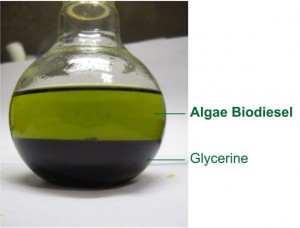 microalgae Nannochloropsis oculata. The production was done via transesterification process with methanol and using calcium methoxide as a catalyst. The biodiesel produced by this method had a high content of polyunsaturated fatty acids as thus was suitable as a winter grade biodiesel.
The main advantage of using calcium methoxide as a catalyst is that the yield of biodiesel is higher (92%), compared to the yield (22%) obtained by using MgZr as a catalyst. Another advantage is that the calcium methoxide can be reused for five times while maintaining the yield of biodiesel.
Leave a Reply
| | posted by Gayathri